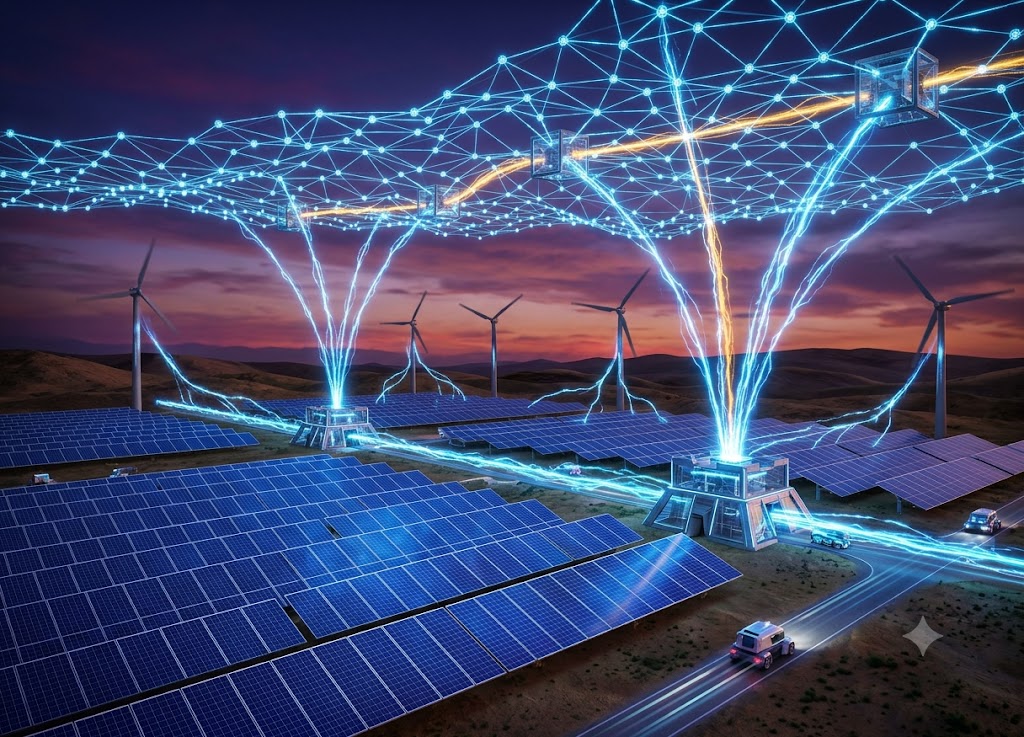
The Intermittency Problem
Solar and wind are variable by nature: the sun sets, clouds pass, and wind speeds fluctuate minute to minute. A grid built around predictable, dispatchable fossil generation must now absorb supply that swings with the weather while keeping frequency and voltage within tight tolerances.
Balancing this variability in real time is the central engineering challenge of the energy transition. It requires forecasting, fast-responding reserves, and far more granular control than legacy grids were designed to provide.
Grid Stability and Inertia
Traditional generators provide rotational inertia that naturally resists sudden frequency changes. Inverter-based renewables provide none of this inherent stability, so high-penetration grids can become fragile during disturbances.
Grid-forming inverters, synthetic inertia, and fast frequency response are emerging solutions that let renewable assets actively support stability rather than merely injecting power.
Storage as the Enabler
Energy storage decouples generation from consumption, smoothing the gap between when renewable energy is produced and when it is needed. Lithium-ion batteries handle short-duration shifting, while pumped hydro, flow batteries, and emerging long-duration technologies address multi-hour and seasonal gaps.
Co-locating storage with renewable plants also reduces curtailment, the wasteful practice of switching off clean generation because the grid cannot absorb it.
Smarter Transmission and Demand
Connecting remote solar and wind farms to load centers requires significant transmission investment and intelligent congestion management. High-voltage DC links and dynamic line rating help move more power over existing corridors.
On the demand side, flexible loads, electric vehicles, and smart appliances can shift consumption to match renewable availability, turning demand itself into a grid-balancing resource.